Antiferromagnets Finally Take Orders: Northwestern’s Octupole Spin Torque Opens a Path to Magnet-Proof MRAM

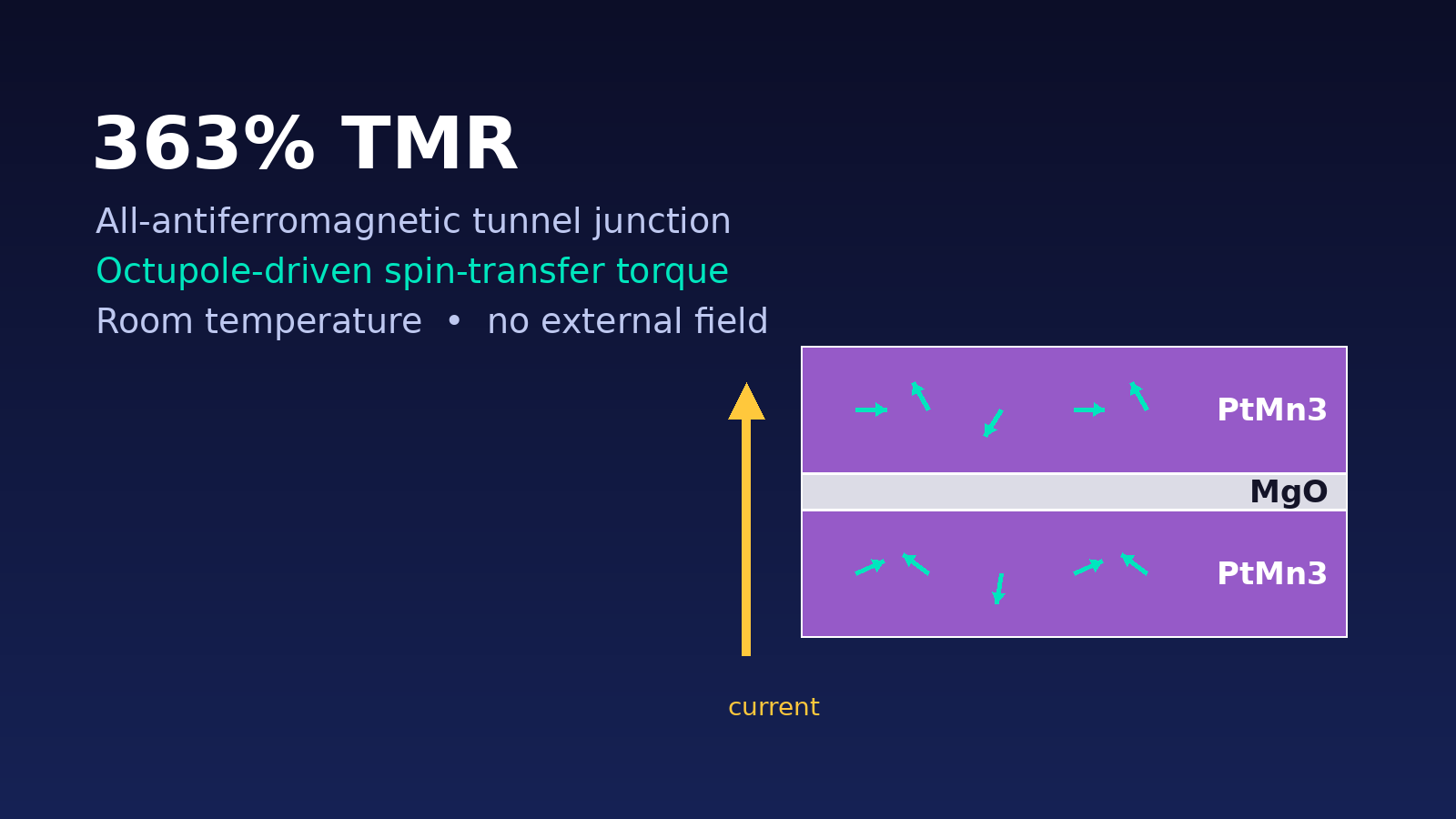
A team led by Northwestern University’s Pedram Khalili reported in Nature on October 21, 2026 that it has electrically written and read data in a magnetic memory cell built entirely from antiferromagnets, materials long thought to be nearly impossible to control with current. The researchers built nanoscale all-antiferromagnetic tunnel junctions (AATJs) from two layers of […]

Continue Reading

Beyond GaN and SiC: Cornell’s 7-eV “Colossal Bandgap” Semiconductor

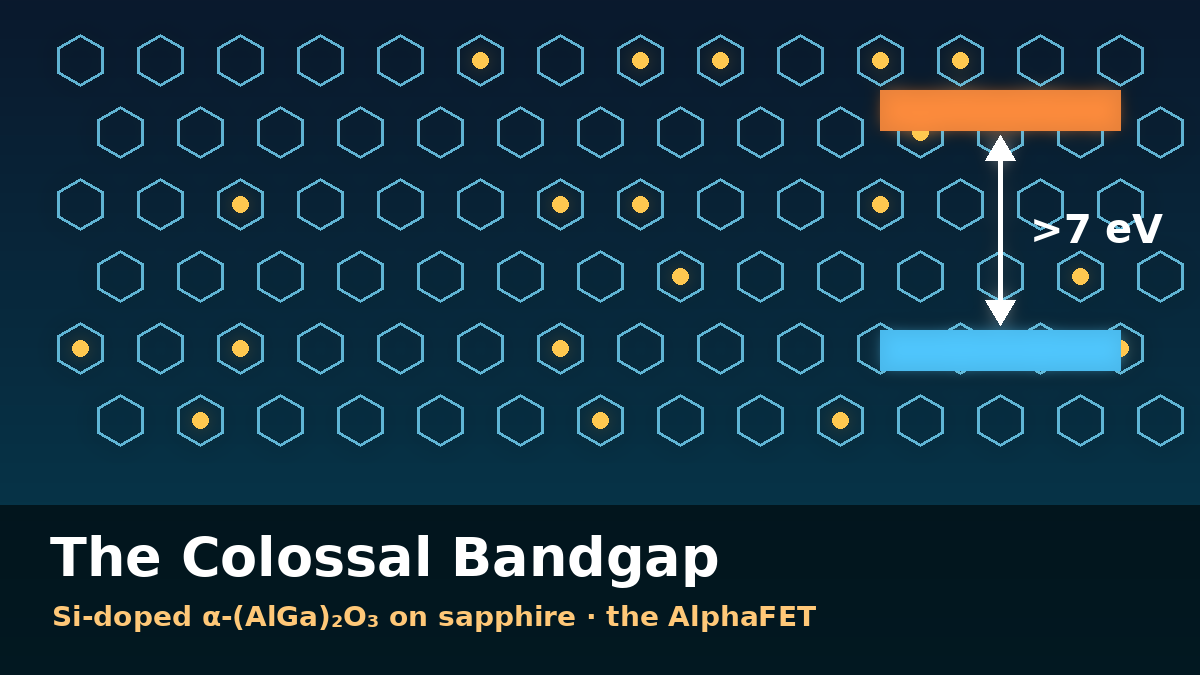
A Cornell University-led team has reported a semiconductor with a bandgap exceeding 7.0 electronvolts (eV), wider than cubic boron nitride, the next-widest-bandgap semiconductor known. Published in Nature on October 7, 2026, the work shows that silicon-doped α-(AlxGa1−x)2O3, an alloy of aluminum and gallium oxides, can be grown as a conductive film on inexpensive sapphire and […]

Continue Reading

CFET + GaN (Complementary FET with Gallium Nitride channels)

CFET + GaN (Complementary FET with Gallium Nitride channels) is a forward-looking combination of vertical transistor stacking and ultra-wide-bandgap semiconductors designed to merge logic density with extreme switching speed and efficiency. While it’s still largely in the research and prototyping phase, there are several published and demonstrated examples from major semiconductor R&D groups and labs […]

Continue Reading

Microfluidic Cooling

Microfluidic cooling is one of the most fascinating upcoming technologies for breaking through CPU thermal limits — it literally routes liquid coolant through microscopic channels inside the silicon package (or even within the silicon die itself). Here are some real-world examples and prototypes to illustrate how it works and what’s coming: 1. IBM & ETH […]

Continue Reading

Majorana 1: Microsoft’s Breakthrough Quantum Chip Poised to Revolutionize Computing

Microsoft has recently unveiled Majorana 1, a groundbreaking quantum chip poised to revolutionize the field of quantum computing. This innovation leverages a novel material known as a topoconductor to create more stable and scalable qubits, potentially accelerating the development of practical quantum computers. The Challenge of Qubit Stability Quantum bits, or qubits, are the fundamental […]

Continue Reading

Quantum error correction

Quantum error correction is one of the biggest hurdles in the development of practical quantum computers. Unlike classical bits, which exist as either 0 or 1, qubits can exist in superpositions of both states. However, this also makes them incredibly fragile, as even tiny interactions with their environment can introduce errors. Here’s a deeper look […]

Continue Reading

Google “Willow” CPU

In December 2024, Google unveiled its groundbreaking quantum chip, Willow, marking a significant milestone in quantum computing. Designed to address the persistent challenge of error correction, Willow demonstrated the potential to revolutionize computational capabilities. However, within weeks of its announcement, Google abruptly shut down the project, sparking widespread speculation and concern within the tech community. […]

Continue Reading

The Future of Data: Datacenters in Space 🌌🚀

When we think of data centers, most of us picture sprawling, high-tech facilities located on Earth, buzzing with servers, cooling systems, and millions of blinking lights, all processing and storing the vast amounts of data we generate. But as data demand skyrockets and the environmental impact of Earth-based data centers grows, tech companies are looking […]

Continue Reading